
Credit: Justin Knight
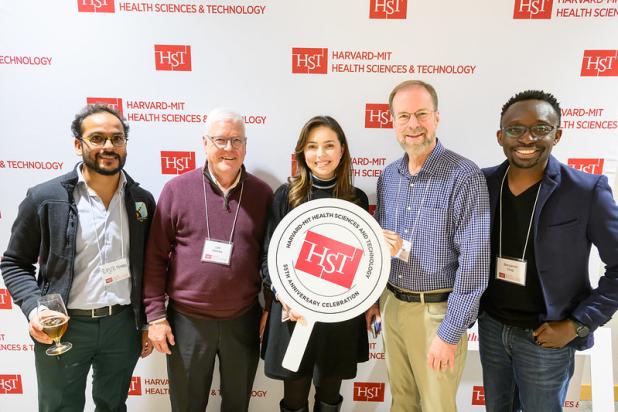
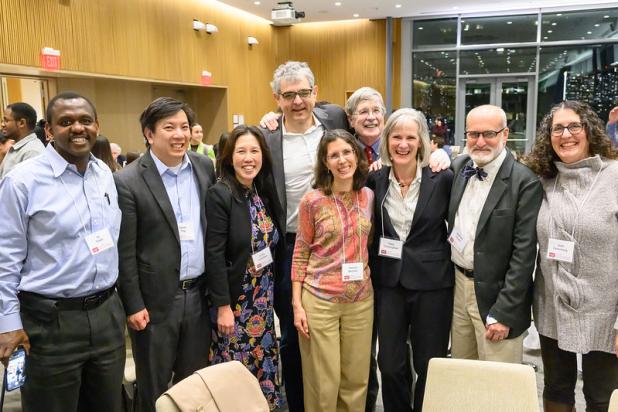
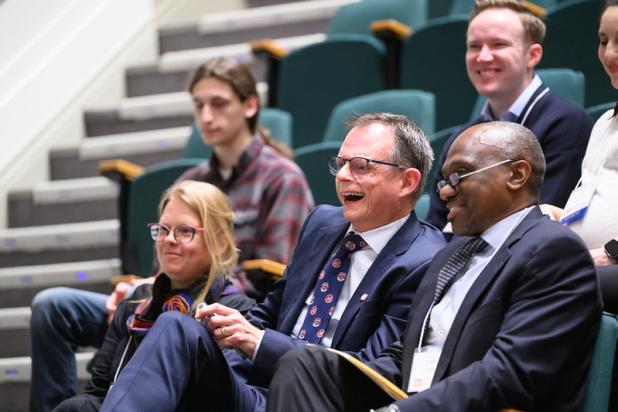
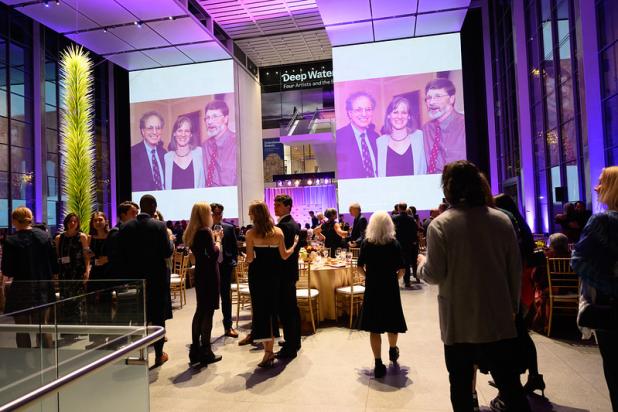
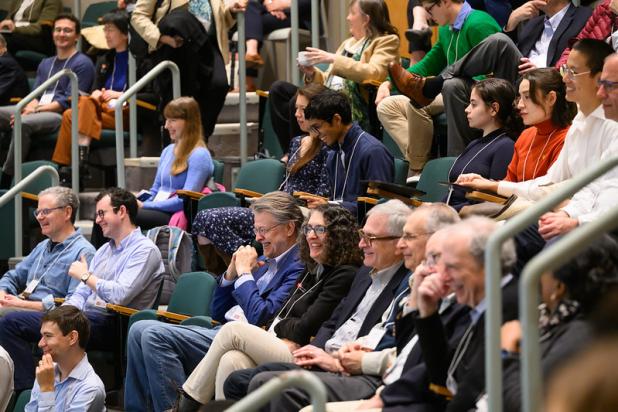
More than 400 alumni, students, faculty and staff gathered for an event that was equal parts homecoming, celebration, and opportunity to plot the future and the direction of HST.
Mindy Blodgett | IMES/HST
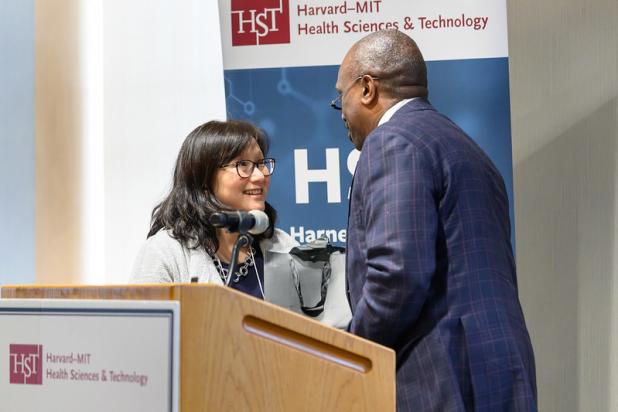
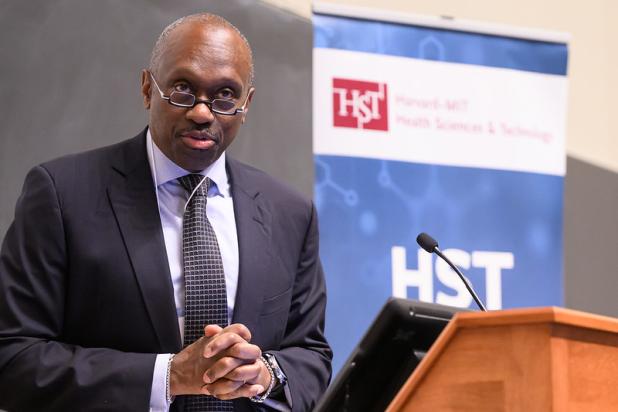
The Harvard-MIT Program in Health Sciences and Technology (HST), “has proven that when engineers and scientists and clinicians get together, human health leaps forward,” said Maria C. Yang, PhD, interim Dean of Engineering, MIT, speaking at the (HST) 55th anniversary celebration, held recently at both MIT and Harvard. Yang, who kicked off the event, was one of many academic leaders, HST alumni, faculty, researchers, students and staff who gathered to celebrate HST’s history, its many achievements, its accomplished alumni, and to share ideas on its future direction.
Michael Rosenblatt, MD, who served as HST co-director at Harvard from 1992-1998, told attendees of the celebration, “In general, it’s not a good idea to have two bosses…you wind up trying to please two institutions, who have different cultures, and different values…the track record of joint ventures is miserable.”
Credit: Justin Knight
But, he added, HST has proven to be a bright exception to this truism. In the case of HST, the vision to join key elements of two giants of higher education into one program has not only succeeded, it has flourished—empowering and training clinician-scientists since 1970, and counting.
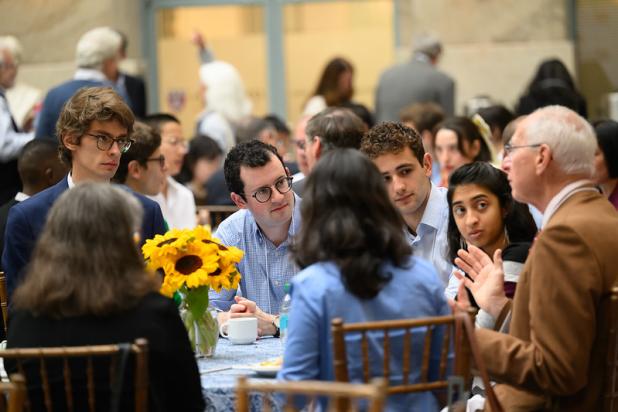
Testimonials about the brilliant spirit of Irving London, the renowned hematologist and geneticist—who died in 2018 at age 99, and who was HST’s founding director— were woven throughout the two-day event. Held November 7-8—featuring talks and presentations from past and present HST leadership, alumni, faculty, students and staff—there was also time for exuberant networking and socializing, culminating in an awards dinner at the Boston Museum of Fine Arts.
Credit: Justin Knight
London dreamed that Harvard and MIT could join forces on an innovative health education program that would give MD students engineering experience, and engineering students, clinical experience—giving each some vital knowledge that could improve healthcare quality. The audacious idea came to life through HST, the world’s oldest and largest biomedical science/engineering and physician-scientist training program in the US. The occasion of the HST program’s 55th anniversary was therefore seen as an important time to reflect upon its remarkable history, while also brainstorming solutions to the challenges facing healthcare, research and education, today.
“HST graduates have not only defied expectations, they have defied gravity,” said George Q. Daley, Dean of Harvard Medical School (HMS), and an HST alum himself (HST MD ‘91), who welcomed participants to the second day of sessions. “They have distinguished themselves in business, biotech, medicine, research…and it continues to be a magnet for the most extraordinary students.” Daley cited a few leading HST alumni, including Bruce Rosen, MD, HST PhD ‘84 who oversaw the development of the technique functional magnetic resonance imaging (fMRI), and David Ho, HST MD ‘78, a pioneer in the HIV drug regimen that has helped so many.
Credit: Gretchen Ertl
The event was full of insights, reminiscing, and predictions for a future for HST in which it is continuously evolving and adapting to solve new and long-standing challenges in human health. London’s genius as an investigator, medical doctor, and educator was celebrated throughout the event, as were the many accomplishments of the alumni who have gone on to careers in research, medicine, education, entrepreneurship, and government service.
Collin M. Stultz, HST MD ’97, PhD, the director of HST, shared vital statistics from the program: currently 190 students are in the HST MD curriculum of the London Society (where HST is housed at HMS); roughly half of HST MD students also enroll in a PhD program; 60% of MD-PhD students are in HST; and 70% of MD-only students stay for an optional fifth year to extend MD thesis research. Stultz described the London Society (named after Irving London, it is one of five academic societies at HMS, and is the one to which all HST students belong) as a “unique interdisciplinary opportunity that bridges a broad range of engineering, scientific and computational disciplines.” Stultz is currently serving as director for both, Harvard, and MIT, as a search is underway for a new Harvard co-director. Stultz replaced Wolfram Goessling, who earlier this year became chair of the department of internal medicine at Yale School of Medicine, chief of internal medicine at Yale New Haven Hospital, and physician-in-chief for medicine across the Yale New Haven Health system.
Credit: Gretchen Ertl
At MIT, where the Institute for Medical Engineering and Science (IMES) is HST’s home, 20-30 PhD students are admitted each year into the Medical Engineering and Medical Physics (MEMP) program. Stultz said that a recently revamped curriculum in HST is aimed at turning it into one, truly integrated program, where PhD and biomedical courses are linked more tightly together, and where students are trained in interdisciplinary thinking, whether they are MD, or PhD students. Goessling shared more details of the MD curriculum revamp, including the formation of a 2022 task force, which recommended significant updates to course offerings, including a weighty role for instruction in Generative AI and ML in medicine, science and society.
Credit: Gretchen Ertl
Alumni who attended said they were thrilled to reconnect with each other, with faculty and staff, and to mingle with current students. “I really wanted to be here,” said Diane Shao, HST MD ‘07, PhD, who is currently a principal investigator at Boston Children’s Hospital, an attending physician in the Department of Neurology, and an instructor in pediatric neurology, HMS. Shao has also launched a venture capital firm called Legacy, which will fund early-stage life science research. “It’s been inspiring to talk with the current students, to imagine their careers evolving…It’s been a chance to hear about some of the innovations in medical and science education… And I just feel such a sense of gratitude to HST for the many opportunities I’ve had––I can look back and really see the benefits.”
Shao added that the launch of her venture capital fund reminded her of the “vast network” she has access to, as an alumna of HST, with its connections to both Harvard and MIT.
Credit: Gretchen Ertl
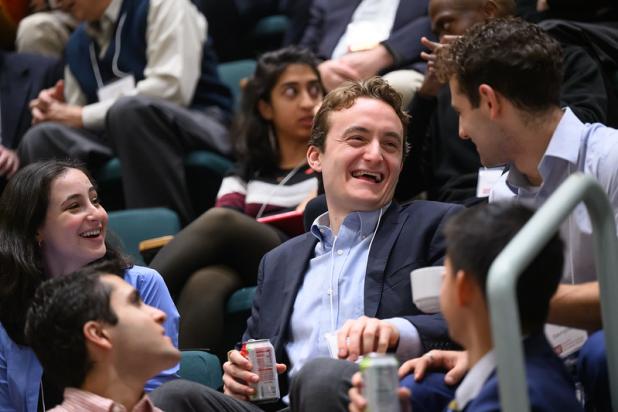
Kayton (Katie) Rotenberg, a second-year HST MD student, commented during the student panel that in her experience, HST faculty and leadership “are invested in our professional and personal success,” and that her coursework has encouraged her to “keep asking ‘why’ along every step of the way.”
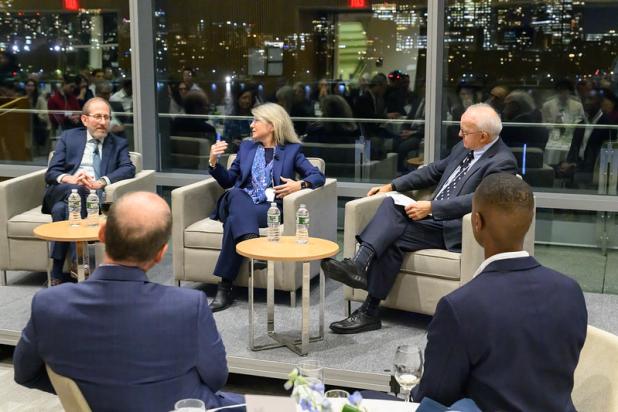
One of the highlights of the two-day event was a fireside chat between MIT President Sally Kornbluth, and Harvard President Alan Garber, moderated by Daley. Daley lauded the fact that Kornbluth, a scientist, and cancer cell biologist, and Garber, a physician, and healthcare economist, have emphasized the importance of life sciences in research and education at their institutions. The two leaders reflected together on how their backgrounds in science, and medicine, have shaped their views, and approaches to leadership.
Credit: Justin Knight
The two-day event was capped with a talk by Richard Cohen, HST MD ’76, PhD, professor emeritus of the MIT Institute for Medical Engineering and Science (IMES),who was a member of the first HST MD class. He reminisced that HST “started as an interesting experiment” and that he applied to the nascent program because of its potential to “apply physics to medical problems.”
The event ended with Bernard Chang, MD, Dean of Medical Education, HMS, presenting awards and profound thanks to former HST directors, and HST administrative leadership, including: Goessling, Rosenblatt, Joe Bonventre, HST, MD ’76, Martha Gray HST PhD, ’86, Emery N. Brown, Fred Bowman, Julie Greenberg, HST PhD ’94,and Patty Cunningham. Current HST leadership, including Henrike Besche, director of education, and senior lecturer, and Jessica Orthman-Queen, director of HST administration, and the administrative teams at HST, were also thanked for their hard work ensuring a meaningful, successful event.
Credit: Gretchen Ertl
The two days included several panels and presentations, including:
Credit: Gretchen Ertl
- A presentation by Alex K. Shalek, director of IMES, and Thomas Heldt, HST MEMP ’04, associate director of IMES. Shalek described the IMES mission at the convergence of engineering, science and medicine to transform human health, through new research thrusts, and how it is developing deeper ties to HMS via HST. Heldt detailed his own history at HST, and how it intersected with the formation of IMES. There were also lightning presentations by IMES and HST faculty: Ellen Roche Abby Rockefeller Mauze Professor, department of Mechanical Engineering, IMES; Marzyeh Ghassemi, Ghermeshausen Career Development Professor, Electrical Engineering and Computer Science, IMES; and Laura Lewis, Athinoula A. Martinos Associate Professor of IMES and EECS, MIT, associate faculty, Athinoula A. Martinos Center for Biomedical Imaging, MGH.
- A presentation by David Cohen, HST MD ‘87, PhD, former director of HST, HMS, on the life of Irving London and his vision for HST.
- A panel discussion with former and current HST directors, moderated by Stultz, including: Gray, David Cohen, Goessling, Rosenblatt, Brown.
- An HST alumni panel moderated by David Golan, MD, PhD, Dean for Research Initiatives and Global Programs, HMS, including: Catherine Corrigan, HST PhD ’96, Raphael Bueno, HST MD ’85, Jay Schnitzer, HST MD ’83, PhD, Ann Celi HST MD ‘95, David Page, HST MD ‘84.
- Lightning talks by recent HST graduates: Constantine Tzouanas, HST PhD ’25, Emma Fink, HST MD ’20, and Elizabeth Healey, HST PhD ‘25.
- A student panel moderated by Junne Kamihara, HST MD ‘08, PhD, associate director, MD Advising, HST: Sam Zinga, Mariale Vicent Allende, Adam Berger, Rotenberg, Diana Grass.
The festivities were made possible by a gift from the Chiang J. Li MD Family Foundation and by the J.W. Kieckhefer Lectures in Health Sciences and Technology.